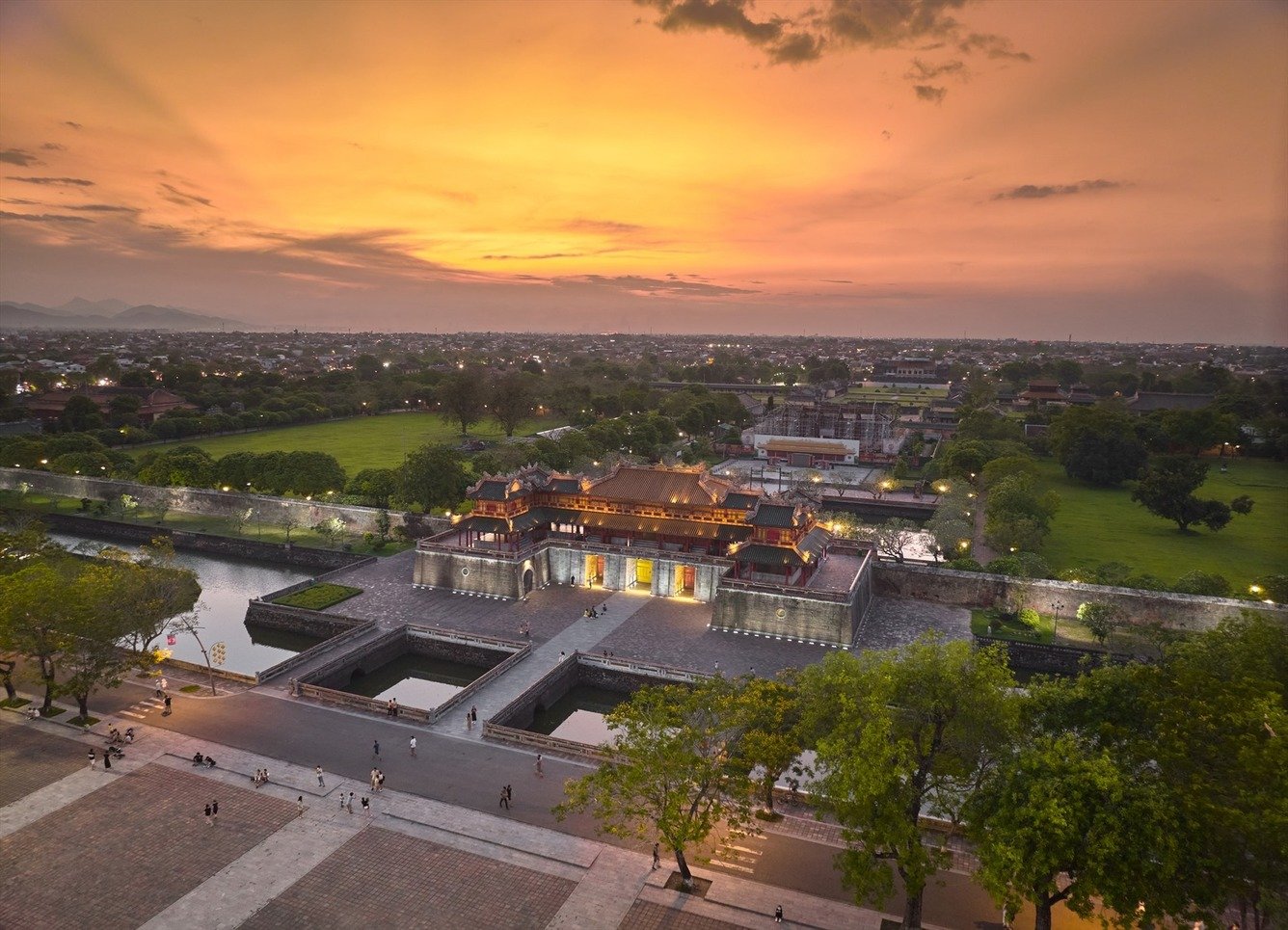
Hue’s Imperial City is one of Vietnam’s most fascinating historical sites, and there’s more to it than most visitors realize on a quick walk-through.
1. It was built to mirror the Forbidden City in Beijing. When the Nguyen Dynasty chose Hue as its capital in the early 1800s, the layout of walls, gates, and courtyards was deliberately modeled after the Chinese imperial style, adapted to the local landscape along the Perfume River.
2. The complex is surrounded by a moat and thick stone walls. The outer citadel stretches for kilometers, built for defense as much as ceremony, with the Ngo Mon Gate serving as the main entrance reserved for the emperor.
3. Much of it was damaged during the 20th century. Wars took a heavy toll on the original structures, and restoration work is still ongoing today in several areas of the complex.
4. It’s a UNESCO World Heritage Site. Recognized in 1993, the Complex of Hue Monuments protects not just the Imperial City itself but royal tombs and pagodas scattered around the city.
5. Early mornings are the best time to visit. Arriving right when it opens means fewer crowds, softer light for photos, and a much better sense of what the space would have felt like centuries ago.
Want to see it with a local guide who can bring the history to life? Check out our Hue Imperial Ancient City Free Walking Tour.