Emperor Duy Tan: The Young Emperor Who Refused to Be a Puppet
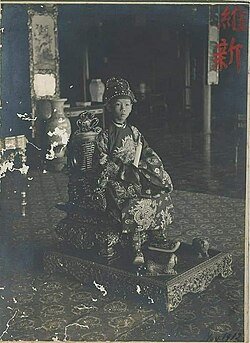
Emperor Duy Tan (1900–1945), born Prince Nguyễn Phúc Vĩnh San, was the 11th emperor of the Nguyen Dynasty. He ruled from 1907 to 1916, succeeding his father, Emperor Thanh Thai.
If Emperor Thanh Thai had laid the foundation for resistance against French colonial rule, Emperor Duy Tan was the young emperor who turned that spirit into real revolutionary action.
A Seven-Year-Old Emperor Who Surprised the French
After Emperor Thanh Thai was forced to abdicate by the French in 1907, the French chose his son, Prince Vĩnh San, to succeed him.
The boy was only seven years old.
The French believed that a child on the throne would be easy to control and could be shaped according to their wishes.
When French officials first met Prince Vĩnh San, he was playing in the dirt. His clothes were messy, his hands were covered in sand, and he seemed shy and nervous around Westerners.
The French immediately agreed that he was a suitable choice. To them, the little prince looked timid and perhaps not particularly intelligent.
But they were in for a surprise.
After only one coronation ceremony, the shy little boy seemed to become a completely different person. He suddenly carried himself with the dignity and confidence of a real emperor. French journalists were astonished, describing the transformation almost as if “another soul had entered the boy.”
Emperor Duy Tan spoke French fluently and, on some occasions, was even openly proud and defiant when dealing with the French Resident Superior and Governor-General.
The court asked to add one year to his official age, making him eight, and gave him the reign name Duy Tan, meaning roughly “reform and renewal.”
The French had hoped for a young and obedient emperor.
Instead, as he grew older, Emperor Duy Tan became increasingly patriotic and fiercely determined to defend Vietnam’s interests.
Standing Up to the French
In 1912, French Resident Superior Mahé reportedly ordered excavations at Thien Mu Pagoda, the tomb of Emperor Tu Duc, and the Imperial City, allegedly in search of gold and treasures.
Emperor Duy Tan strongly objected.
In protest, he closed the palace and refused to communicate with the French authorities in Hue. His reaction was so serious that the Governor-General of French Indochina had to personally intervene in an attempt to calm the situation.
Even as a teenager, Emperor Duy Tan was already trying to understand the political situation of his country.
At just 13, he studied international treaties, particularly the Patenôtre Treaty of 1884. He believed that the French were not respecting the commitments they had made.
He proposed sending the senior mandarin Nguyễn Hữu Bài to France to demand a revision of the treaty and reclaim Vietnam’s rights.
But the court officials were too frightened to support the plan, so it never happened.
At 15, Emperor Duy Tan went even further. He pressured six senior regents to sign a formal protest against French interference and send it to the French Resident Superior.
They refused.
They even asked the Empress Dowager to persuade the young emperor to stop.
For Emperor Duy Tan, this was a bitter lesson. He became disappointed not only with the French but also with the weakness and hesitation of his own court.
And this experience helped push him toward a much more radical decision: if the court could not fight for the country, he would find another way to do it himself.
“Dirty Water? Then Use Blood to Wash It.”
There is a famous story about Emperor Duy Tan from his teenage years.
During the summer, the young emperor often went to Cua Tung Beach for a holiday.
One day, he came running back from the beach with both hands covered in sand and dirt.
A palace attendant quickly brought him a basin of water so he could wash his hands.
The emperor looked at him and asked:
“If dirty hands can be washed with water, then what do you use to wash dirty water?”
The attendant was shocked and had no answer.
The young emperor then reportedly said:
“If the water is dirty, use blood to wash it.”
The saying later became one of the most famous stories associated with Emperor Duy Tan, symbolizing the young emperor’s determination to fight for his country’s independence.
Joining the 1916 Uprising
In 1916, Emperor Duy Tan became directly involved in a secret plan to launch an uprising against French rule.
Through Pham Huu Khanh, who pretended to be a driver, revolutionary leaders Tran Cao Van and Thai Phien secretly met Emperor Duy Tan at Cua Tung Beach.
The young emperor agreed to join the uprising.
The plan was to begin the revolt in Hue in the early morning of May 3, 1916, with cannon fire from the Imperial City serving as the signal.
But the plan was leaked by a member of the movement in Quang Ngai.
The French quickly confiscated weapons from Vietnamese auxiliary troops and strengthened their defenses.
The uprising collapsed before it could properly begin.
When Emperor Duy Tan was captured, he refused to simply return to the throne as a puppet emperor.
He demanded the right to act freely as the legitimate ruler of Vietnam. He reportedly told the French:
“If you want to force me to be the emperor of Annam, then treat me as a grown-up emperor with the freedom to act, especially the freedom to exchange information and opinions with the French government.”
To protect the prestige of the Nguyen Dynasty, the French placed most of the blame on the revolutionary leaders.
Tran Cao Van, Thai Phien, Ton That De and Nguyen Quang Sieu were executed.
Emperor Duy Tan, however, was officially portrayed as having been “influenced” or “incited” by others.
He was removed from the throne and exiled to Réunion Island in the Indian Ocean, where he was sent into exile together with his father, Emperor Thanh Thai.
Life in Exile on Réunion
Life in exile took the two emperors in very different directions.
Emperor Thanh Thai remained largely distant and unwilling to cooperate with the French.
Emperor Duy Tan, on the other hand, embraced the modern world.
He became highly educated, learned English and French, studied electrical technology, built and repaired radios, rode horses, played the violin, wrote poetry and prose, published articles in newspapers, and became involved in local social activities.
He also developed a wide circle of friends and acquaintances.
His literary achievements were particularly impressive.
In 1924, he reportedly won first prize in a writing competition organized by the Academy of Réunion with his work “Variations sur une lyre brisée” — Variations on a Broken Lyre.
Another prose poem, “Ce que la voix des choses”, was later circulated in French-language schools as a model literary text.
For a former emperor living in exile on a small island thousands of kilometers from Vietnam, his life had taken a remarkably unexpected turn.
From Exiled Emperor to French Army Officer
During World War II, Emperor Duy Tan became interested in Charles de Gaulle, the leader of the Free French forces fighting Nazi Germany.
He admired De Gaulle’s determination to resist foreign occupation and saw him as a possible model for the struggle to save his own country.
Using his knowledge of radio technology, Emperor Duy Tan secretly assisted resistance activities against the pro-German Vichy authorities on Réunion.
Because of these activities, he was arrested and imprisoned for about six weeks.
After his release, he joined the French Army as a private in 1942.
He later went to Europe and served with the staff of the 9th Colonial Infantry Division.
With the support of Charles de Gaulle, his military career advanced surprisingly quickly. Within only a few years, he rose from junior officer to Major, receiving the rank in September 1945.
But Emperor Duy Tan never abandoned Vietnam.
His Dream of Returning to Vietnam
Emperor Duy Tan continued to dream of an independent and unified Vietnam.
He supported the idea of a Vietnamese state that would maintain friendly relations with France while temporarily relying on France for certain diplomatic and military matters.
For him, the exact political system was less important than the fate of the Vietnamese people.
He once expressed his position in words that showed just how strongly he felt:
“As for me, my love for Vietnam does not allow me to leave the door open to any internal conflict. What I want is for everyone to work together under any political system — communist, socialist, royalist or monarchist. That does not matter. What matters is saving the people.”
Emperor Duy Tan hoped that the French might help restore him to the throne so that he could contribute to rebuilding Vietnam.
But history was more complicated.
Some historians believe that the French government, under Charles de Gaulle, also saw the former emperor as a potentially useful political figure — someone whose influence could help France regain control and stabilize French Indochina after Japan’s surrender.
Emperor Duy Tan, meanwhile, may have seen the same opportunity from the opposite direction: he could use French support to pursue the ultimate goal of a more independent Vietnam.
In other words, both sides may have been trying to use the same political opportunity for very different purposes.
A Tragic End
Only a few months after receiving the rank of Major, Emperor Duy Tan’s hopes of returning to Vietnam came to a sudden end.
On December 26, 1945, the aircraft carrying him crashed in Central Africa.
Emperor Duy Tan was killed in the accident.
He was only 45 years old.
His life had taken him from the Imperial City of Hue to exile on Réunion, from radio technology and literature to the battlefields of Europe — and finally to a tragic death far from the country he had spent his life dreaming of serving.
Returning Home
Decades later, his family arranged for his remains to be brought back to France from M’Baiki, Central Africa.
On March 28, 1987, a Buddhist memorial service was held at the International Buddhist Institute in Vincennes, Paris.
Soon afterward, his remains were brought back to Hue.
On April 6, 1987, Emperor Duy Tan was finally laid to rest at An Lang, beside his father, Emperor Thanh Thai.
After more than seven decades in exile, the young emperor who had once refused to become a puppet finally returned home.
Today, Emperor Duy Tan is remembered not simply as the 11th emperor of the Nguyen Dynasty, but as one of the most remarkable young figures in Vietnam’s modern history — an emperor who was placed on the throne as a child because the French thought he would be easy to control, only to grow into a man who repeatedly challenged the system that had put him there.
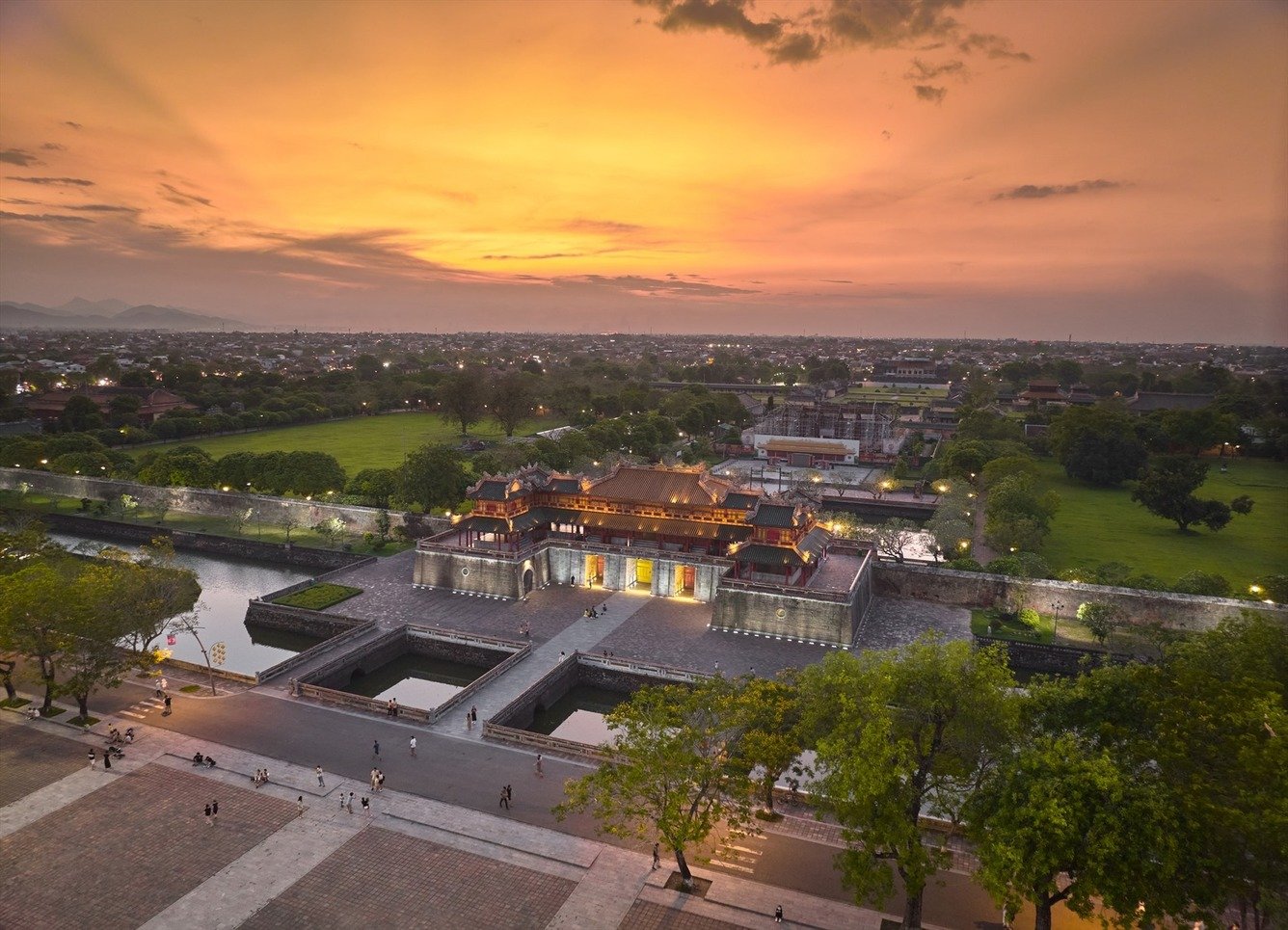
Discover More About the Nguyen Dynasty in Hue
If you’re interested in hearing more stories like this, join our Hue Free Walking Tour and explore the Imperial City with a local guide.
We’ll share stories about the Nguyen emperors, the royal family, life inside the Forbidden City, and some of the lesser-known events that shaped Hue’s history.
Sometimes, the stories behind the old walls are even more interesting than the buildings themselves.