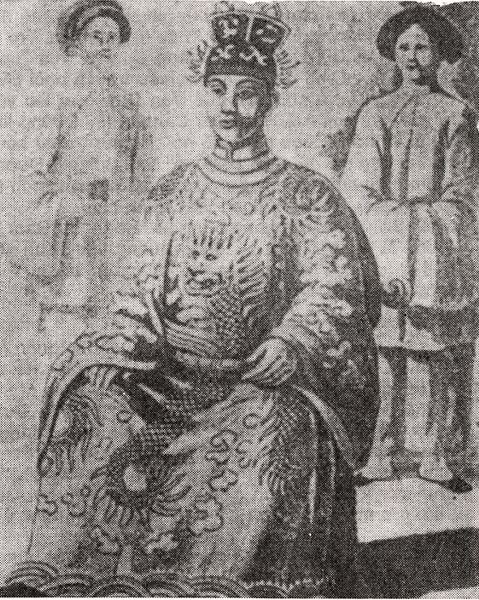
When we talk about the most important emperors of the Nguyen Dynasty, Emperor Minh Mang is one of the names we cannot miss.
Minh Mang was the second emperor of the Nguyen Dynasty. He was born in 1791 as Nguyen Phuc Dam, the fourth son of Emperor Gia Long, the founder of the Nguyen Dynasty.
He became emperor in 1820 and ruled Vietnam until his death in 1841.
If Emperor Gia Long was the man who unified Vietnam and established the Nguyen Dynasty, Minh Mang was the emperor who strengthened and developed the dynasty’s system of government.
During his 21 years on the throne, Minh Mang introduced major reforms in administration, the military, agriculture, education, culture and national defense.
1. A Powerful Centralized Government
One of Minh Mang’s most important achievements was his administrative reform.
Before his reign, Vietnam was divided into different administrative areas such as provinces, towns and military territories. Minh Mang wanted to create a much more centralized and organized system.
In 1831 and 1832, he reorganized the country into provinces and established a clearer system of officials to govern them.
He also reorganized important institutions in the imperial government, including the Six Ministries, the Imperial Secretariat and other advisory and supervisory bodies.
The purpose was simple:
The emperor wanted the government in Hue to have stronger control over the entire country.
This made the Nguyen Dynasty one of the most highly centralized monarchies in Vietnamese history.
In some ways, Minh Mang’s administrative reforms are often compared with the reforms of King Le Thanh Tong, who had strengthened the centralized government several centuries earlier.
2. A Strong Military
Minh Mang also paid great attention to the military.
Under his rule, the army was reorganized into different branches, including infantry, cavalry, elephants, artillery and naval forces.
The navy was particularly important.
The Nguyen government built many large ships and strengthened coastal defenses. Some warships were even equipped with copper plating, reflecting the emperor’s interest in improving military technology.
Minh Mang also ordered naval expeditions to survey and patrol Vietnam’s coastline and islands.
Historical documents from the Nguyen Dynasty record activities involving Hoang Sa and Truong Sa, including surveying, mapping and maintaining Vietnam’s presence in these areas.
3. Agriculture and Public Works
For Minh Mang, a strong country needed a strong agricultural economy.
Vietnam was still primarily an agricultural society, so the emperor paid close attention to farming, irrigation and land development.
His government encouraged the cultivation of new land, including coastal and undeveloped areas.
Large irrigation and hydraulic projects were also carried out.
One famous example is the development of the Vinh Te Canal in southern Vietnam. Other projects helped control flooding and provide water for agriculture.
The government also provided assistance during times of natural disasters.
When floods, droughts or other disasters affected local communities, the imperial government could reduce taxes, distribute rice, provide seeds and offer other forms of relief.
So although Minh Mang is often remembered as a strict emperor, he also understood that the stability of the country depended on the well-being of its people and agricultural production.
4. Science and Technology
Here is something that many visitors find surprising about Minh Mang.
Although he is often described as a conservative emperor, he was also interested in science and technology.
During his reign, Vietnamese craftsmen produced various machines and tools, including equipment for cutting wood, producing gunpowder and pumping water.
One particularly interesting achievement happened in 1839, when Vietnamese craftsmen successfully built a steam-powered boat.
The emperor also ordered officials to study Western technology, especially shipbuilding and mechanical technology.
So Minh Mang was not simply against everything from the West.
He was willing to use foreign technology when he believed it could strengthen the country.
5. Education and Confucian Culture
Minh Mang was also a great supporter of education and Confucian learning.
In 1821, he rebuilt and developed the Imperial Academy, or Quoc Tu Giam, in Hue.
The academy became an important center for educating officials and scholars.
In 1822, the Nguyen Dynasty organized the first Doctoral examinations under Minh Mang.
The emperor also reorganized the examination system and established a more regular system for selecting talented people to work for the government.
During his reign, six major doctoral examinations were held, producing 56 Doctors and 20 Pho Bang, a lower academic rank.
Minh Mang also established the National History Office, or Quoc Su Quan, where historians worked to record and compile the official history of the Nguyen Dynasty.
This is extremely important because many historical documents about nineteenth-century Vietnam were produced or preserved through these institutions.
6. The Name “Dai Nam”
Another important event happened during Minh Mang’s reign.
In 1839, the emperor officially used the name Dai Nam for the country.
The name had a long history and had appeared in earlier periods, but Minh Mang’s government formally adopted it as the national name during his reign.
It remained associated with Vietnam throughout much of the remaining Nguyen Dynasty.
For Minh Mang, the name represented a powerful and independent Vietnamese state with its own political identity.
7. A Very Hands-On Emperor
One interesting characteristic of Minh Mang was how deeply involved he was in government.
He personally read and commented on a huge number of official documents and reports.
He wanted to know what was happening throughout the country and expected his officials to follow strict rules.
This tells us something important about his personality.
Minh Mang was not an emperor who simply sat inside the palace and left everything to his officials.
He was highly involved in the daily administration of the country.
He was ambitious, disciplined and determined to strengthen imperial authority.
8. But Minh Mang Was Also Controversial
Of course, we should not look at Minh Mang only from a positive perspective.
He was also a very strict and conservative ruler.
One of the most controversial aspects of his reign was his policy toward Christianity and Catholic missionaries.
His government restricted missionary activities and persecuted some missionaries and Vietnamese Christians.
He was also cautious about increasing Western influence in Vietnam.
These policies later became an important part of the debate about why Vietnam did not develop closer relations with Western powers during the nineteenth century.
So when we evaluate Minh Mang, it is better not to simply describe him as a “good king” or a “bad king.”
He was a complex historical figure.
He was an effective administrator and a powerful reformer, but he was also conservative, authoritarian and sometimes extremely strict.
Minh Mang’s Legacy
So, what did Minh Mang actually leave behind?
Perhaps the best way to understand him is this:
Gia Long founded the Nguyen Dynasty.
Minh Mang strengthened it.
He transformed the administrative system, strengthened the military, developed agriculture and irrigation, expanded education, supported historical scholarship and reinforced the power of the central government.
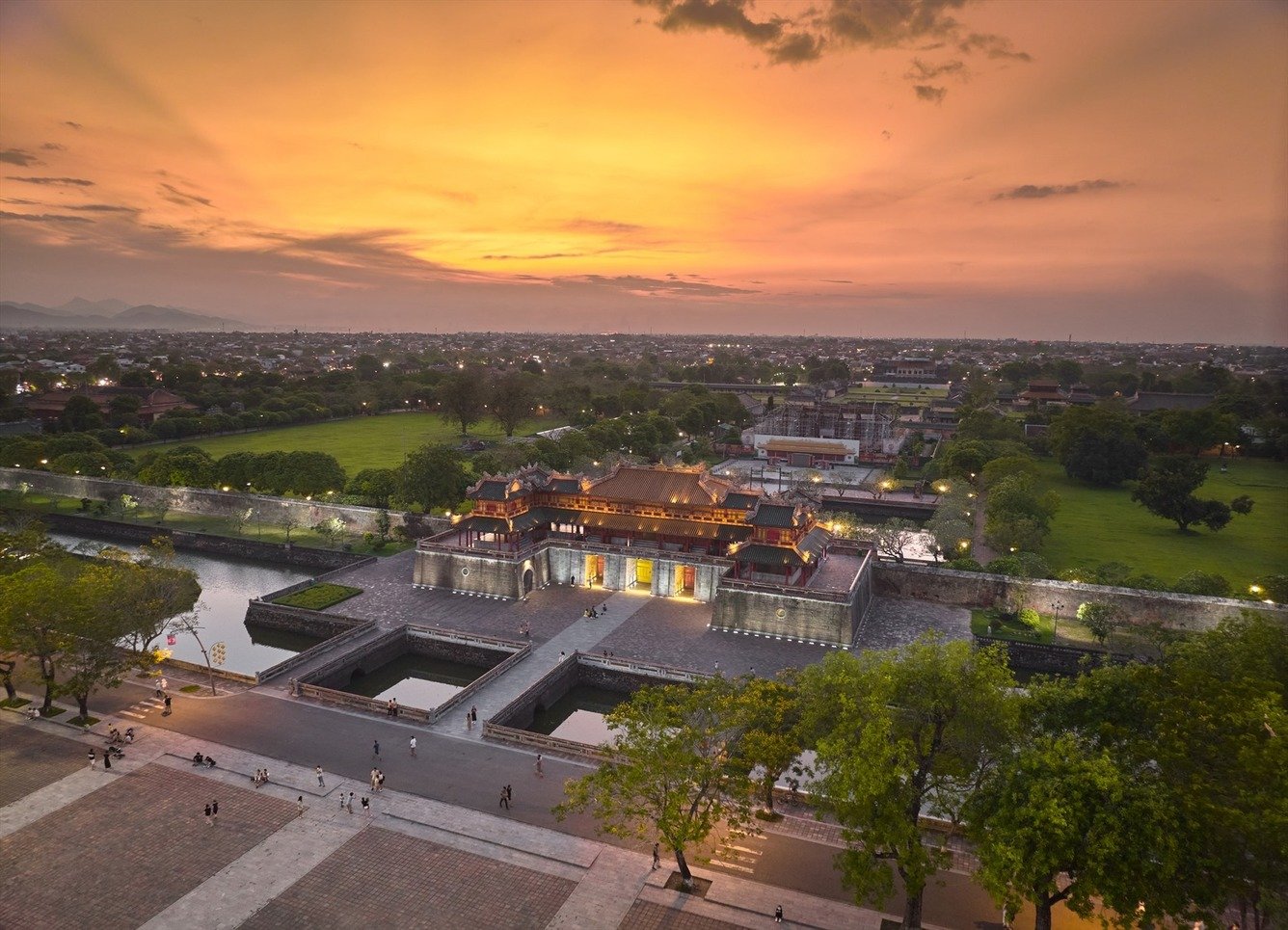
Many aspects of the Nguyen Dynasty that we see today in Hue were shaped during his reign.
When we walk through the Imperial City of Hue, we are therefore not simply looking at beautiful palaces and gates.
We are looking at the remains of a political system that Minh Mang worked hard to organize and strengthen.
And that is why Minh Mang is one of the most important emperors to understand if we want to understand Hue, the Nguyen Dynasty and nineteenth-century Vietnam.